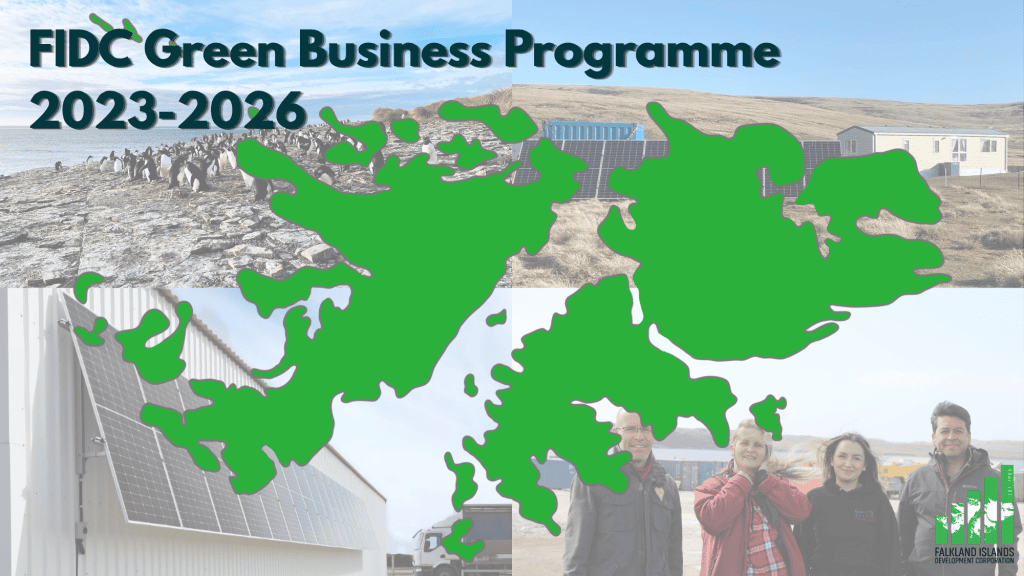
After three (3) years of implementation, approximately 40 percent (%) of the Falkland Islands working-age population has accessed Green financing via FIDC.
After three (3) years running its Green Business Programme, FIDC injected a total of £892,000 in financing through its fit-for-purpose suite of environmentally focused loans and grants directly into the Falkland Islands economy, successfully supporting a deliverable of the Falkland Islands Government (FIG) Island Plan (2022 – 2026), the latter of which provided an initial capital of £750,000, and followed-up with an additional £142,000.
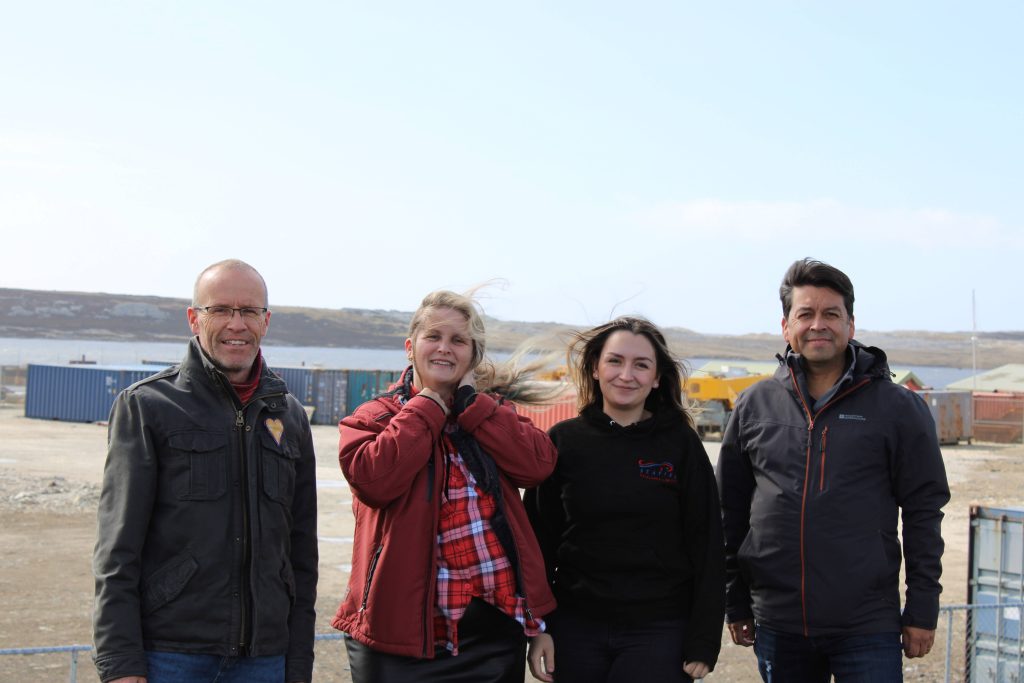
“The Green Business Programme is an ambitious undertaking, comprised of 10 loan and grant funding schemes within FIDC that are constantly being monitored against the needs of clients as well as priorities of FIG,” said Louise Ellis, deputy managing director for FIDC. “Because the financing mechanisms always require the client to put in some amount of funding, the total direct spend into the economy is much higher than what FIDC is tracking. The knock-on effect is more business for everyone in the Falkland Islands, all while emphasizing green initiatives.”
Since its inception, the Green Business Programme has been carefully monitored and reported on at each FIDC Board, publishing 18 bi-monthly, three (3) half-year, three (3) full year, and this three (3) year full report.
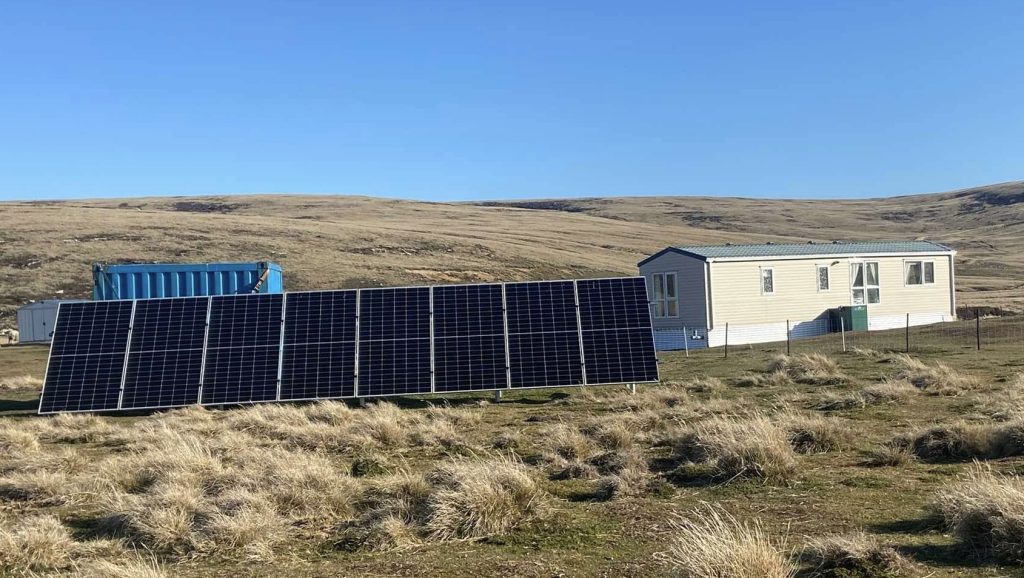
Among some of the achievements from the Green Business Programme, FIDC supported 17 farms in full replacement or partial upgrade to their renewable energy system, and approved 58 applications for financial support to improve the thermal efficiency of domestic properties approved.
The aforementioned examples tap directly back into the current FIG Energy Strategy 2025, which notes that many installations in Camp are “nearing the end of their lifespan” and are in need of “significant maintenance or replacement,” and specifically includes deliverables such as “retrofitting 200 existing homes to be thermally efficient by 2027” where “Financial mechanisms such as the FIDC grant schemes for private sector … will help to support this.”
In addition to handling a record 1,089 individual client enquiries for the Falkland Islands over three years, 42 percent (%) of all enquiries over the period related to the Green Business Programme.
The types of enquiries related to the Green Business Programme are detailed in the following table:
| Domestic Thermal Efficiency Grant | 131/453 | 29% |
| Commercial Thermal Efficiency Grant | 20/453 | 4% |
| Rural Energy Grant | 84/453 | 19% |
| Water Grant | 34/453 | 8% |
| Rural Energy Additional Generation Grant | 24/453 | 5% |
| Domestic Thermal Energy Grant | 27/453 | 6% |
| Commercial Thermal Energy Grant | 18/453 | 4% |
| Domestic Electric Safety Grant | 50/453 | 11% |
| Electric Vehicle (EV) Grant | 21/453 | 5% |
| Green Loan – Commercial | 26/453 | 6% |
| Green Loan – Personal | 11/453 | 2% |
| EV Charging Infrastructure Grant | 6/453 | 1% |
| Environmental Consultancy Grant | 1/453 | >0.5% |
In terms of Green loan funding – capped at £10,000 for individuals, and £20,000 for businesses, at a reduced interest rate – the total value of Green loans awarded over the three (3) year period was as follows:
| 2023-2024 | 2024-2025 | 2025-2026 | Total |
| £58,768 | £70,336 | £63,935 | £193,039 |
In addition to Green loan funding, the total value of Green grants awarded over the three (3) year period was as follows:
| 2023-2024 | 2024-2025 | 2025-2026 | Total |
| £164,812 | £255,469 | £345,452 | £765,733 |
The above table represents the three (3) greatest years in terms of total amount granted via FIDC in a given financial year at any point in the history of FIDC.
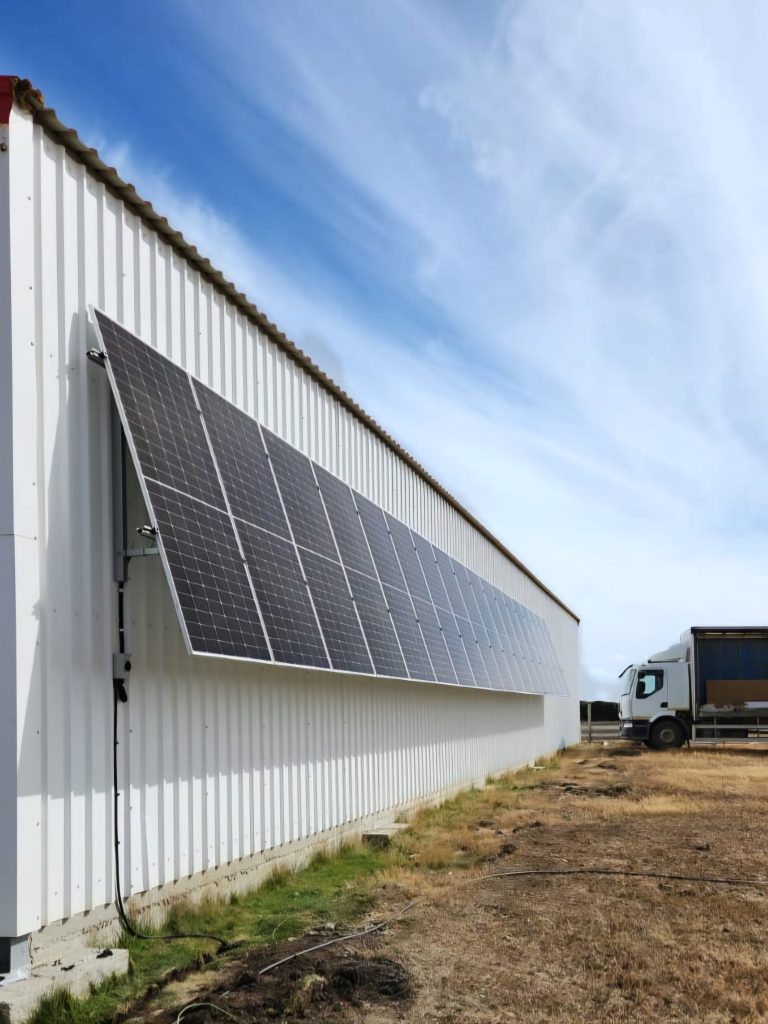
The Green Business Programme had a noticeable positive impact on the rural economy (Camp), with an average of £157,441 per annum, attributed to rural focussed grants such the 24-hour hybrid renewable power systems and water schemes.
A staggering 79 percent (%) of all Green grant and loan financing awarded just in the 2025-2026 financial year was directly to businesses and domestic properties in Camp. This equates to circa £325,000 of funding benefitted the rural economy and community.
“Maintaining a sustainable rural economy is a key objective for FIDC, as we are mandated to focus on supporting the development of a sustainable Camp economy,” said Ellis. “This also neatly ties in with the published FIG Economic Development Strategy in May 2026, which says, ‘the economy will support a prosperous and healthy population, across Camp and Stanley,’ and goes on to state that ‘economic development of Camp is crucial to ensuring quality of life and preservation of the heritage and history of the Falkland Islands’.”
As part of the Green Business Programme, FIDC also committed to extending the existing Rural Energy Grant (REG) scheme to cover the costs associated with the replacement of renewable energy systems in Camp, making it available to both businesses operating in Camp and domestic properties, ensuring 24-hour power is available and enabling ageing systems to be upgraded and replaced as well as brand new installations continuing.
The REG is also supported by the Renewable Energy Additional Generation Grant (REAGG) scheme, which allows business and domestic properties to extend their provision of renewable power by adding a secondary energy source (usually solar).
Combined, the REG and REAGG schemes account for the most amount of expenditure within the Green Business Programme, with the below table outlining the FIDC expenditure for the REG and REAGG schemes over the three (3) year period:
| Financial Year | Rural Energy Grant (REG) approved | Renewable Energy Additional Generation Grant (RAGG) approved | Total approved |
| 2023-2024 | £83,665 | £12,995 | £96,660 |
| 2024-2025 | £88,546 | £3,500 | £92,046 |
| 2025-2026 | £248,700 | £0 | £248,700 |
| Total | £420,911 | £16,495 | £437,406 |
In total, the REG and REAGG schemes account of 58 percent (%) of the total £750,000 in funding from FIG for the Green Business Programme.
To date, 23 farms remain eligible for REGs, but have yet to apply to the scheme. Over the coming two (2) financial years, 36 farms will become eligible to the scheme, equating to a total of 59 farms eligible for replacement systems under the REG.
In conjunction with Camp-focused support via the Green Business Programme, FIDC made 51 rural visits over the three (3) year period. According to Ellis, this allowed FIDC greater engagement with the Camp community, as evidenced by 50 percent (%) of client enquiries coming from Camp over the same period.
“The Green Business Programme was made to be as accessible as possible, so that more environmentally focused initiatives could be taken up by the entire Falkland Islands community,” said Ellis. “While Camp may be synonymous with environmentally friendly, the Green Business Programme has really allowed individuals and businesses to consider the environment as they look to grow and develop.”